
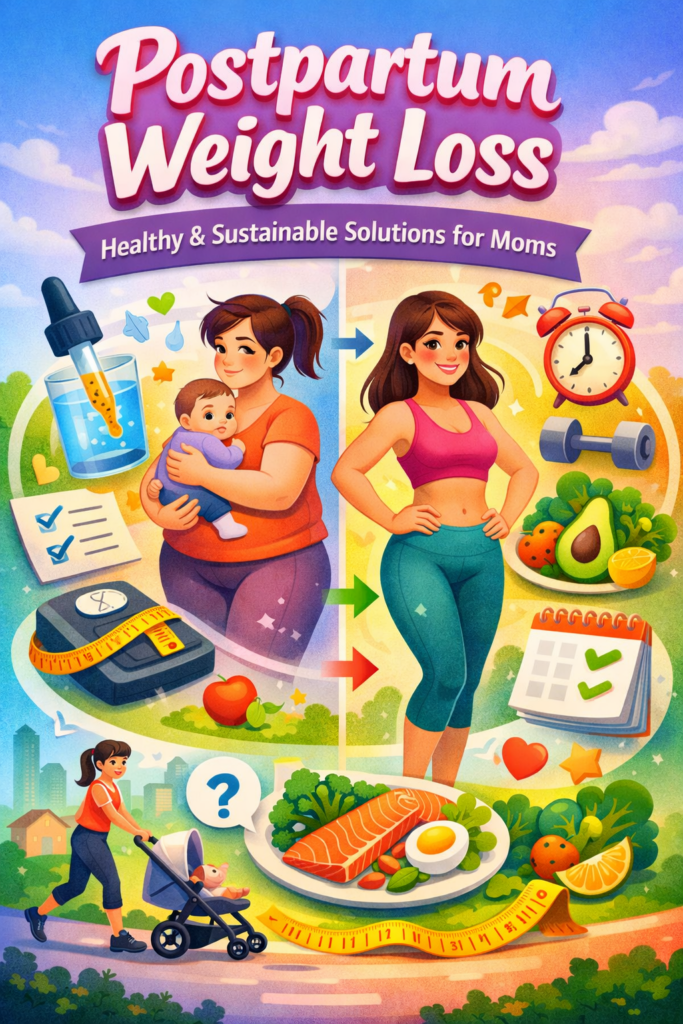
The Ultimate Guide to Healthy Weight Loss for Women (2026)
Safe, Sustainable Strategies—With a Special Focus on Postpartum Weight Loss
**Updated:** January 05, 2026
This long-form guide is written for women who want real results without extreme diets. If you’re postpartum, your body is recovering and adapting—so your plan must be gentle, consistent, and realistic.
**What you’ll get here:** practical nutrition, movement, sleep, stress tools, and an optional look at weight-loss drops as a routine-support tool (not a magic fix).
**Medical note:** This article is educational only. If you’re postpartum, breastfeeding, pregnant, or have a health condition, consult a qualified healthcare professional before major changes.
Table of Contents
1. Why weight loss matters for women
2. Postpartum weight loss: what makes it different
3. The 4-pillar framework
4. Nutrition: fat loss without extremes
5. Postpartum nutrition: recovery + results
6. Movement: walking + strength for busy schedules
7. Sleep & stress: the invisible blockers
8. Supplements & drops: how to use responsibly
9. Meal ideas + snack ideas
10. 14-day starter plan
11. Troubleshooting plateaus
12. FAQs + Schema FAQ
13. Image SEO + Core Web Vitals for WordPress
1) Why Weight Loss Matters for Women (Beyond Appearance)
Healthy weight loss is about energy, mobility, confidence, and long-term protection against metabolic risks. For many women, even a modest reduction in excess weight can improve daily comfort and reduce strain on joints. It can also support better sleep, steadier mood, and more consistent energy.
The goal is not a perfect body—it’s a capable body. Sustainable progress comes from repeatable habits, not punishment.
A quick mindset shift
Instead of asking, “How fast can I lose weight?”, ask: “What can I repeat for 6–12 months?” That question leads to strategies that work.
2) Postpartum Weight Loss: Why It’s Different
After pregnancy, your body is recovering from a major biological event. It’s normal to feel that your appetite, cravings, and energy are different. Postpartum weight loss is influenced by:
**Hormonal shifts:** changes in estrogen, progesterone, and stress hormones can affect hunger and water retention.
**Sleep disruption:** fewer hours and fragmented sleep can increase cravings and reduce motivation.
**Stress:** emotional load can drive comfort eating and reduce activity.
**Time constraints:** postpartum life often doesn’t allow strict diets or long workouts.
A postpartum plan should be gentle: reduce friction, simplify meals, focus on walking, and build strength gradually.
If you’re breastfeeding
Breastfeeding can increase hunger and energy needs. Avoid aggressive dieting. Use nutrient-dense meals, hydration, and steady habits. Always discuss supplements and calorie targets with your clinician.
3) The Sustainable 4-Pillar Framework
To make weight loss feel easier, build around four pillars:
1) **Nutrition for fullness** (protein + fiber + smart portions)
2) **Movement you can repeat** (walking + simple strength)
3) **Sleep & stress support** (reduce cravings and water retention)
4) **Consistency tools** (systems, reminders, optional supplementation)
If you improve each pillar by just 10–20%, the combined effect becomes powerful.
4) Nutrition: Fat Loss Without Extremes
Most women do not need a complicated diet. The basics drive most results:
Protein at each meal
Protein supports fullness and helps protect lean muscle. Practical options: eggs, yogurt, chicken, fish, legumes, tofu.
The balanced plate method
Use the plate structure:
- ½ vegetables or high-fiber produce
- ¼ protein
- ¼ fiber-rich carbs
- small portion healthy fats
Control liquid calories
Sugary drinks can add calories without fullness. Prefer water, tea, or coffee (watch sugar additions). If you crave flavor, use lemon, mint, or sparkling water.
Build “default meals”
Busy women win by reducing decisions. Choose 2–3 breakfasts and 3–5 lunches/dinners you can repeat. Consistency improves results more than variety.
5) Postpartum Nutrition: Recovery + Results
Postpartum weight loss should not compete with recovery. The best approach:
**Focus on nutrient density:** protein, fiber, iron-rich foods, fruits/vegetables, and healthy fats.
**Avoid aggressive restriction:** it often rebounds and increases fatigue.
**Use gentle structure:** balanced plates and simple meal timing.
Hunger management tips
- Eat protein early in the day (breakfast matters)
- Add fiber to meals (vegetables, oats, legumes)
- Use planned snacks if needed (especially while breastfeeding)
The “two upgrades” rule
If you feel overwhelmed, only do two upgrades per day:
1) A protein-focused breakfast
2) A 10–20 minute walk
This is enough to restart progress.
6) Movement: Walking + Strength for Busy Women
You don’t need extreme workouts. You need repeatable movement.
Walking is your foundation
Start with 10 minutes daily and build up. Walking supports mood, digestion, circulation, and steady calorie burn.
Strength training (2–3 days/week)
Strength protects muscle and improves body composition. A simple 20-minute home routine can work:
- Squats or sit-to-stands
- Glute bridges
- Incline push-ups
- Band rows
- Core-safe work (dead bug, bird dog)
If postpartum, choose core-safe movements and get professional guidance if you have pelvic floor symptoms or diastasis concerns.
Micro-workouts
If time is limited, do 7–10 minutes. Consistency beats intensity.
7) Sleep & Stress: The Invisible Weight-Loss Blockers
If you’re doing ‘everything right’ but progress is slow, check sleep and stress.
Why sleep changes hunger
Poor sleep can increase cravings and reduce fullness. It also makes exercise feel harder.
Why stress matters
Stress can drive emotional eating and water retention. It can also reduce your daily movement without you noticing.
Practical fixes
- Morning light exposure
- A short wind-down routine
- A caffeine cutoff (as early as practical)
- 60 seconds of slow breathing before meals
Postpartum life may limit sleep. That’s okay. Use a plan that works even when sleep isn’t perfect.
8) Supplements & Weight-Loss Drops: How to Use Responsibly
Supplements should support your routine—not replace it.
Why liquid drops are popular
They are quick to take and easy to link to habits like morning water. Many people find routine tools helpful because they reduce friction.
How to integrate drops into a routine
Link them to a consistent action:
- Take with your first glass of water
- Or before your most consistent meal
Safety notes
- If breastfeeding, pregnant, or taking medications, consult a healthcare professional.
- Avoid mixing multiple stimulant products.
- Stop if you feel unwell.
**Explore the option here:** https://getkeyslimdrops.cc/vsl1/#aff=omarabdellatif
9) Meal Ideas + Snack Ideas (High-Satiety, Busy-Friendly)
Below are practical ideas to keep you full without complicated cooking.
Breakfast ideas
1) Greek yogurt + berries + a tablespoon of nuts
2) Egg wrap with vegetables
3) Oatmeal + protein (milk/Greek yogurt) + fruit
4) Smoothie: milk/yogurt + banana + berries + oats
Lunch/dinner ideas
1) Chicken bowl: rice + vegetables + olive oil
2) Tuna salad + whole-grain bread + fruit
3) Lentil soup + side salad
4) Stir-fry: protein + vegetables + simple sauce
5) Omelet + salad + potatoes
Snack ideas
- Fruit + yogurt
- Nuts (portion-controlled)
- Hummus + vegetables
- Cheese + fruit
Smart swap strategy
Don’t ban foods—swap most of the time. Keep treats occasionally and enjoy them mindfully.
10) A Repeatable 14-Day Starter Plan (Postpartum-Friendly)
Repeat this plan every month to build momentum.
Days 1–3: Reduce friction
- Choose a repeatable breakfast
- Drink water early
- Walk 10 minutes
Days 4–7: Add structure
- Balanced plate at 2 meals/day
- Walk 15–20 minutes
- Add 1 short strength session
Days 8–14: Increase consistency
- Balanced plate at 2–3 meals/day
- Walk 20–30 minutes
- Strength 2 sessions
- Add a 10-minute wind-down routine
Progress metrics
Track: steps, waist, energy, sleep quality, and how clothes fit. The scale is optional.
11) Troubleshooting Plateaus
If progress stalls, use this checklist:
1) **Portions increased over time** → return to balanced plate
2) **Steps dropped** → add 10 minutes walking
3) **Protein too low** → add protein at breakfast
4) **Stress high** → reduce caffeine and add wind-down
5) **Too many liquid calories** → swap to water/zero-sugar drinks
Plateaus are normal. Calm adjustments beat drastic changes.
12) FAQs (For Women & Postpartum Weight Loss)
How soon can I start losing weight after giving birth?
Many women can begin gentle, healthy habits soon after delivery, but timing depends on recovery, delivery type, and your clinician’s guidance. Start with hydration, walking, and balanced meals; progress gradually.
Is it safe to diet while breastfeeding?
Aggressive calorie restriction is not recommended. Aim for steady, nutrient-dense meals and modest, sustainable changes. If breastfeeding, discuss calorie targets and supplements with your healthcare provider.
Why is postpartum belly fat so stubborn?
Hormonal shifts, stress, sleep loss, and reduced activity can increase fat storage and water retention—especially around the abdomen. Consistency and stress management are often as important as calories.
Do weight-loss drops work on their own?
No. Drops can support routines and adherence, but results come from a combination of nutrition, movement, sleep, and consistency.
How long does postpartum weight loss usually take?
There’s no universal timeline. Healthy progress is typically gradual over months. Focus on weekly habits, not daily fluctuations.
What’s the best exercise for new moms?
Low-impact walking, gentle strength work, and postpartum-safe core routines are great starting points. Increase intensity only when you feel ready and cleared.
What foods help reduce cravings?
Protein, fiber, and healthy fats improve fullness. Examples include eggs, Greek yogurt, legumes, lean meats, oats, berries, and nuts.
How can I improve results if I’m very busy?
Use simple systems: repeatable breakfasts, 10-minute walks, water reminders, and meal-prep shortcuts. Choose tools that reduce friction rather than add complexity.
13) Image SEO + Core Web Vitals for WordPress (Fast + Discover-Friendly)
Image SEO
- Use descriptive filenames (like the 10 suggestions below)
- Write ALT text that describes the image (avoid keyword stuffing)
- Keep a consistent animated style
Core Web Vitals checklist
1) Export images as **WebP** (or AVIF)
2) Resize to your theme width (commonly 1200px)
3) Compress to keep files small (aim 150–250KB each when possible)
4) Enable lazy-loading for below-the-fold images
5) Ensure width/height attributes exist to reduce CLS
6) Use caching + a CDN if possible
Explore a routine-support drops option here: https://getkeyslimdrops.cc/vsl1/#aff=omarabdellatif
Bonus: The Most Common Postpartum Weight-Loss Myths (And What Actually Works)
Myth 1: You must do intense workouts to see results
Reality: Consistent walking and basic strength work can be enough. Intensity is optional; consistency is essential.
Myth 2: Carbs are the enemy
Reality: Fiber-rich carbs can support energy, mood, and training. The goal is balance and portion control—not elimination.
Myth 3: If the scale doesn’t move, nothing is happening
Reality: Postpartum bodies retain water and fluctuate. Waist size, clothing fit, strength, and energy often improve before the scale.
Myth 4: You need perfect sleep
Reality: You need a plan that works with imperfect sleep. Focus on what you can control: simple meals, walking, hydration, and stress reduction.
Myth 5: Supplements replace habits
Reality: The best tools support adherence. They don’t replace nutrition and movement. Use them as a routine helper.
Bonus: A Simple Weekly Grocery List (Easy Meals, Minimal Decisions)
Proteins: eggs, Greek yogurt, chicken, canned tuna, legumes.
Carbs: oats, rice, potatoes, whole-grain bread.
Fats: olive oil, nuts, avocado.
Produce: mixed vegetables, leafy greens, berries, bananas, citrus.
Extras: spices, simple sauces, sparkling water.
Bonus: How to Make the Plan Stick (Behavior Tips)
1) Make it visible: keep your water bottle and walking shoes in sight.
2) Reduce choices: repeat breakfasts and lunches.
3) Use a tiny habit: a 10-minute walk after one meal daily.
4) Track one metric: steps or protein—don’t track everything.
5) Plan for imperfect days: a ‘minimum viable day’ keeps momentum.
Bonus: The Most Common Postpartum Weight-Loss Myths (And What Actually Works)
Myth 1: You must do intense workouts to see results
Reality: Consistent walking and basic strength work can be enough. Intensity is optional; consistency is essential.
Myth 2: Carbs are the enemy
Reality: Fiber-rich carbs can support energy, mood, and training. The goal is balance and portion control—not elimination.
Myth 3: If the scale doesn’t move, nothing is happening
Reality: Postpartum bodies retain water and fluctuate. Waist size, clothing fit, strength, and energy often improve before the scale.
Myth 4: You need perfect sleep
Reality: You need a plan that works with imperfect sleep. Focus on what you can control: simple meals, walking, hydration, and stress reduction.
Myth 5: Supplements replace habits
Reality: The best tools support adherence. They don’t replace nutrition and movement. Use them as a routine helper.
Bonus: A Simple Weekly Grocery List (Easy Meals, Minimal Decisions)
Proteins: eggs, Greek yogurt, chicken, canned tuna, legumes.
Carbs: oats, rice, potatoes, whole-grain bread.
Fats: olive oil, nuts, avocado.
Produce: mixed vegetables, leafy greens, berries, bananas, citrus.
Extras: spices, simple sauces, sparkling water.
Bonus: How to Make the Plan Stick (Behavior Tips)
1) Make it visible: keep your water bottle and walking shoes in sight.
2) Reduce choices: repeat breakfasts and lunches.
3) Use a tiny habit: a 10-minute walk after one meal daily.
4) Track one metric: steps or protein—don’t track everything.
5) Plan for imperfect days: a ‘minimum viable day’ keeps momentum.
Bonus: The Most Common Postpartum Weight-Loss Myths (And What Actually Works)
Myth 1: You must do intense workouts to see results
Reality: Consistent walking and basic strength work can be enough. Intensity is optional; consistency is essential.
Myth 2: Carbs are the enemy
Reality: Fiber-rich carbs can support energy, mood, and training. The goal is balance and portion control—not elimination.
Myth 3: If the scale doesn’t move, nothing is happening
Reality: Postpartum bodies retain water and fluctuate. Waist size, clothing fit, strength, and energy often improve before the scale.
Myth 4: You need perfect sleep
Reality: You need a plan that works with imperfect sleep. Focus on what you can control: simple meals, walking, hydration, and stress reduction.
Myth 5: Supplements replace habits
Reality: The best tools support adherence. They don’t replace nutrition and movement. Use them as a routine helper.
Bonus: A Simple Weekly Grocery List (Easy Meals, Minimal Decisions)
Proteins: eggs, Greek yogurt, chicken, canned tuna, legumes.
Carbs: oats, rice, potatoes, whole-grain bread.
Fats: olive oil, nuts, avocado.
Produce: mixed vegetables, leafy greens, berries, bananas, citrus.
Extras: spices, simple sauces, sparkling water.
Bonus: How to Make the Plan Stick (Behavior Tips)
1) Make it visible: keep your water bottle and walking shoes in sight.
2) Reduce choices: repeat breakfasts and lunches.
3) Use a tiny habit: a 10-minute walk after one meal daily.
4) Track one metric: steps or protein—don’t track everything.
5) Plan for imperfect days: a ‘minimum viable day’ keeps momentum.
Bonus: The Most Common Postpartum Weight-Loss Myths (And What Actually Works)
Myth 1: You must do intense workouts to see results
Reality: Consistent walking and basic strength work can be enough. Intensity is optional; consistency is essential.
Myth 2: Carbs are the enemy
Reality: Fiber-rich carbs can support energy, mood, and training. The goal is balance and portion control—not elimination.
Myth 3: If the scale doesn’t move, nothing is happening
Reality: Postpartum bodies retain water and fluctuate. Waist size, clothing fit, strength, and energy often improve before the scale.
Myth 4: You need perfect sleep
Reality: You need a plan that works with imperfect sleep. Focus on what you can control: simple meals, walking, hydration, and stress reduction.
Myth 5: Supplements replace habits
Reality: The best tools support adherence. They don’t replace nutrition and movement. Use them as a routine helper.
Bonus: A Simple Weekly Grocery List (Easy Meals, Minimal Decisions)
Proteins: eggs, Greek yogurt, chicken, canned tuna, legumes.
Carbs: oats, rice, potatoes, whole-grain bread.
Fats: olive oil, nuts, avocado.
Produce: mixed vegetables, leafy greens, berries, bananas, citrus.
Extras: spices, simple sauces, sparkling water.
Bonus: How to Make the Plan Stick (Behavior Tips)
1) Make it visible: keep your water bottle and walking shoes in sight.
2) Reduce choices: repeat breakfasts and lunches.
3) Use a tiny habit: a 10-minute walk after one meal daily.
4) Track one metric: steps or protein—don’t track everything.
5) Plan for imperfect days: a ‘minimum viable day’ keeps momentum.
Bonus: The Most Common Postpartum Weight-Loss Myths (And What Actually Works)
Myth 1: You must do intense workouts to see results
Reality: Consistent walking and basic strength work can be enough. Intensity is optional; consistency is essential.
Myth 2: Carbs are the enemy
Reality: Fiber-rich carbs can support energy, mood, and training. The goal is balance and portion control—not elimination.
Myth 3: If the scale doesn’t move, nothing is happening
Reality: Postpartum bodies retain water and fluctuate. Waist size, clothing fit, strength, and energy often improve before the scale.
Myth 4: You need perfect sleep
Reality: You need a plan that works with imperfect sleep. Focus on what you can control: simple meals, walking, hydration, and stress reduction.
Myth 5: Supplements replace habits
Reality: The best tools support adherence. They don’t replace nutrition and movement. Use them as a routine helper.
Bonus: A Simple Weekly Grocery List (Easy Meals, Minimal Decisions)
Proteins: eggs, Greek yogurt, chicken, canned tuna, legumes.
Carbs: oats, rice, potatoes, whole-grain bread.
Fats: olive oil, nuts, avocado.
Produce: mixed vegetables, leafy greens, berries, bananas, citrus.
Extras: spices, simple sauces, sparkling water.
Bonus: How to Make the Plan Stick (Behavior Tips)
1) Make it visible: keep your water bottle and walking shoes in sight.
2) Reduce choices: repeat breakfasts and lunches.
3) Use a tiny habit: a 10-minute walk after one meal daily.
4) Track one metric: steps or protein—don’t track everything.
5) Plan for imperfect days: a ‘minimum viable day’ keeps momentum.
Bonus: The Most Common Postpartum Weight-Loss Myths (And What Actually Works)
Myth 1: You must do intense workouts to see results
Reality: Consistent walking and basic strength work can be enough. Intensity is optional; consistency is essential.
Myth 2: Carbs are the enemy
Reality: Fiber-rich carbs can support energy, mood, and training. The goal is balance and portion control—not elimination.
Myth 3: If the scale doesn’t move, nothing is happening
Reality: Postpartum bodies retain water and fluctuate. Waist size, clothing fit, strength, and energy often improve before the scale.
Myth 4: You need perfect sleep
Reality: You need a plan that works with imperfect sleep. Focus on what you can control: simple meals, walking, hydration, and stress reduction.
Myth 5: Supplements replace habits
Reality: The best tools support adherence. They don’t replace nutrition and movement. Use them as a routine helper.
Bonus: A Simple Weekly Grocery List (Easy Meals, Minimal Decisions)
Proteins: eggs, Greek yogurt, chicken, canned tuna, legumes.
Carbs: oats, rice, potatoes, whole-grain bread.
Fats: olive oil, nuts, avocado.
Produce: mixed vegetables, leafy greens, berries, bananas, citrus.
Extras: spices, simple sauces, sparkling water.
Bonus: How to Make the Plan Stick (Behavior Tips)
1) Make it visible: keep your water bottle and walking shoes in sight.
2) Reduce choices: repeat breakfasts and lunches.
3) Use a tiny habit: a 10-minute walk after one meal daily.
4) Track one metric: steps or protein—don’t track everything.
5) Plan for imperfect days: a ‘minimum viable day’ keeps momentum.
Bonus: The Most Common Postpartum Weight-Loss Myths (And What Actually Works)
Myth 1: You must do intense workouts to see results
Reality: Consistent walking and basic strength work can be enough. Intensity is optional; consistency is essential.
Myth 2: Carbs are the enemy
Reality: Fiber-rich carbs can support energy, mood, and training. The goal is balance and portion control—not elimination.
Myth 3: If the scale doesn’t move, nothing is happening
Reality: Postpartum bodies retain water and fluctuate. Waist size, clothing fit, strength, and energy often improve before the scale.
Myth 4: You need perfect sleep
Reality: You need a plan that works with imperfect sleep. Focus on what you can control: simple meals, walking, hydration, and stress reduction.
Myth 5: Supplements replace habits
Reality: The best tools support adherence. They don’t replace nutrition and movement. Use them as a routine helper.
Bonus: A Simple Weekly Grocery List (Easy Meals, Minimal Decisions)
Proteins: eggs, Greek yogurt, chicken, canned tuna, legumes.
Carbs: oats, rice, potatoes, whole-grain bread.
Fats: olive oil, nuts, avocado.
Produce: mixed vegetables, leafy greens, berries, bananas, citrus.
Extras: spices, simple sauces, sparkling water.
Bonus: How to Make the Plan Stick (Behavior Tips)
1) Make it visible: keep your water bottle and walking shoes in sight.
2) Reduce choices: repeat breakfasts and lunches.
3) Use a tiny habit: a 10-minute walk after one meal daily.
4) Track one metric: steps or protein—don’t track everything.
5) Plan for imperfect days: a ‘minimum viable day’ keeps momentum.
Bonus: The Most Common Postpartum Weight-Loss Myths (And What Actually Works)
Myth 1: You must do intense workouts to see results
Reality: Consistent walking and basic strength work can be enough. Intensity is optional; consistency is essential.
Myth 2: Carbs are the enemy
Reality: Fiber-rich carbs can support energy, mood, and training. The goal is balance and portion control—not elimination.
Myth 3: If the scale doesn’t move, nothing is happening
Reality: Postpartum bodies retain water and fluctuate. Waist size, clothing fit, strength, and energy often improve before the scale.
Myth 4: You need perfect sleep
Reality: You need a plan that works with imperfect sleep. Focus on what you can control: simple meals, walking, hydration, and stress reduction.
Myth 5: Supplements replace habits
Reality: The best tools support adherence. They don’t replace nutrition and movement. Use them as a routine helper.
Bonus: A Simple Weekly Grocery List (Easy Meals, Minimal Decisions)
Proteins: eggs, Greek yogurt, chicken, canned tuna, legumes.
Carbs: oats, rice, potatoes, whole-grain bread.
Fats: olive oil, nuts, avocado.
Produce: mixed vegetables, leafy greens, berries, bananas, citrus.
Extras: spices, simple sauces, sparkling water.
Bonus: How to Make the Plan Stick (Behavior Tips)
1) Make it visible: keep your water bottle and walking shoes in sight.
2) Reduce choices: repeat breakfasts and lunches.
3) Use a tiny habit: a 10-minute walk after one meal daily.
4) Track one metric: steps or protein—don’t track everything.
5) Plan for imperfect days: a ‘minimum viable day’ keeps momentum.
Bonus: The Most Common Postpartum Weight-Loss Myths (And What Actually Works)
Myth 1: You must do intense workouts to see results
Reality: Consistent walking and basic strength work can be enough. Intensity is optional; consistency is essential.
Myth 2: Carbs are the enemy
Reality: Fiber-rich carbs can support energy, mood, and training. The goal is balance and portion control—not elimination.
Myth 3: If the scale doesn’t move, nothing is happening
Reality: Postpartum bodies retain water and fluctuate. Waist size, clothing fit, strength, and energy often improve before the scale.
Myth 4: You need perfect sleep
Reality: You need a plan that works with imperfect sleep. Focus on what you can control: simple meals, walking, hydration, and stress reduction.
Myth 5: Supplements replace habits
Reality: The best tools support adherence. They don’t replace nutrition and movement. Use them as a routine helper.
Bonus: A Simple Weekly Grocery List (Easy Meals, Minimal Decisions)
Proteins: eggs, Greek yogurt, chicken, canned tuna, legumes.
Carbs: oats, rice, potatoes, whole-grain bread.
Fats: olive oil, nuts, avocado.
Produce: mixed vegetables, leafy greens, berries, bananas, citrus.
Extras: spices, simple sauces, sparkling water.
Bonus: How to Make the Plan Stick (Behavior Tips)
1) Make it visible: keep your water bottle and walking shoes in sight.
2) Reduce choices: repeat breakfasts and lunches.
3) Use a tiny habit: a 10-minute walk after one meal daily.
4) Track one metric: steps or protein—don’t track everything.
5) Plan for imperfect days: a ‘minimum viable day’ keeps momentum.
Bonus: The Most Common Postpartum Weight-Loss Myths (And What Actually Works)
Myth 1: You must do intense workouts to see results
Reality: Consistent walking and basic strength work can be enough. Intensity is optional; consistency is essential.
Myth 2: Carbs are the enemy
Reality: Fiber-rich carbs can support energy, mood, and training. The goal is balance and portion control—not elimination.
Myth 3: If the scale doesn’t move, nothing is happening
Reality: Postpartum bodies retain water and fluctuate. Waist size, clothing fit, strength, and energy often improve before the scale.
Myth 4: You need perfect sleep
Reality: You need a plan that works with imperfect sleep. Focus on what you can control: simple meals, walking, hydration, and stress reduction.
Myth 5: Supplements replace habits
Reality: The best tools support adherence. They don’t replace nutrition and movement. Use them as a routine helper.
Bonus: A Simple Weekly Grocery List (Easy Meals, Minimal Decisions)
Proteins: eggs, Greek yogurt, chicken, canned tuna, legumes.
Carbs: oats, rice, potatoes, whole-grain bread.
Fats: olive oil, nuts, avocado.
Produce: mixed vegetables, leafy greens, berries, bananas, citrus.
Extras: spices, simple sauces, sparkling water.
Bonus: How to Make the Plan Stick (Behavior Tips)
1) Make it visible: keep your water bottle and walking shoes in sight.
2) Reduce choices: repeat breakfasts and lunches.
3) Use a tiny habit: a 10-minute walk after one meal daily.
4) Track one metric: steps or protein—don’t track everything.
5) Plan for imperfect days: a ‘minimum viable day’ keeps momentum.

